
CVV Attack Mitigation Steps: A Comprehensive Buying Guide
Learn the essential steps to mitigate CVV attacks and find the best solutions to protect your transactions.
Redeem your gift cards at any of our Merchants
You can purchase a gift card from any of these locations

Onyx Gift Cards is a Grenadian company designed to introduce, market and manage gift cards systems in Grenada for retailers and corporations. We are enthusiastic about the effect and influence we will have on the local market. We intend to expand our systems regionally with a range of product offerings and services.
Gift cards are the preferred way of giving and receiving gifts. They carry a monetary value that can be redeemed for gifts at your favorite store.
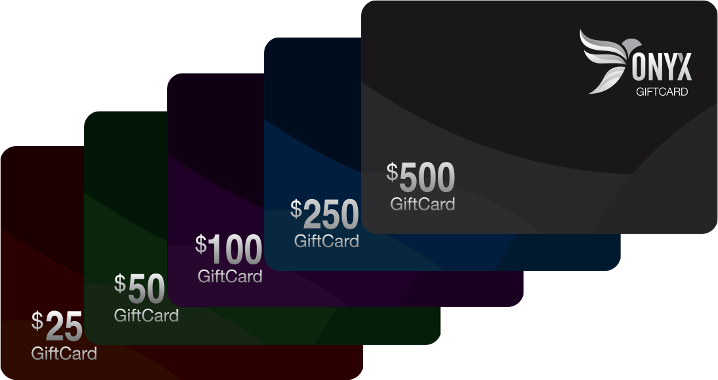
Onyx GiftCards are “Open Gift Cards” which means that they can be redeemed at multiple merchant locations. They are standard credit card size, can fit into the average wallet and made of PVC plastic. Onyx GiftCards are Barcoded for security and safety for the consumer and bear a disclaimer at the back.
Onyx Giftcards can be bought with a branded Card backer which is black in colour and is designed to fit the card. There is an area to write a brief message to the recipient as well.
Reducing CVV attacks means making it slow and expensive for an attacker to guess card verification values across many cards. Merchants do this by capping retry attempts per card and per device, requiring 3-D Secure on risky transactions, blocking automated traffic, and monitoring decline patterns at the BIN, IP, and session level. No single control stops card testing. The combination raises the cost per attempt above what a fraudster will pay.
A CVV attack is a card-testing scheme in which someone submits stolen card numbers with guessed verification values to find combinations that authorize. The CVV is the 3-digit code on the back of most cards, or the 4-digit code on the front of American Express cards. Because the CVV is not stored by merchants, an attacker has to probe a live payment page to learn whether a guess is correct.
Your checkout becomes an oracle. The attacker submits a low-value authorization, reads the response, and keeps the cards that return an approval. Decline messages that distinguish a CVV mismatch from an expired card make the guessing loop faster, so precision in your decline handling matters.
Automation does the rest. Bots rotate through proxies, disposable email addresses, and generated card numbers to spread attempts across thousands of sessions. A single campaign can push through thousands of attempts in minutes, long before a manual review queue catches up.
Layer controls so that each one removes a cheap path to the next guess. The controls below work together and none of them depends on catching the attacker by name.
Small merchants often run default fraud rules, no 3-D Secure, and no velocity limits. That makes them cheaper to probe than large retailers with mature risk engines. Attack volume follows weak controls, not brand size.
No, but it removes most automated attempts and shifts chargeback liability on covered transactions. Treat it as one layer, not a complete defense. Pair it with attempt caps and traffic controls.
Tighten rules first, then investigate. Raise the minimum order value for untrusted sessions, force 3-D Secure on all new customers, and block the proxy ranges and fingerprints you can identify. Contact your acquirer or payment provider the same day so they can flag your account and advise on authorization thresholds.
After the wave passes, review which control caught it and keep that control permanent. Card testing campaigns return to merchants whose defenses were temporary.
Most campaigns run in bursts of minutes to hours. Detection therefore has to be near real time, driven by rules rather than monthly reports.
Codes indicating a verification value mismatch, combined with a high volume of low-ticket attempts, are the classic pattern. Track the ratio rather than the raw count.
Yes. Report the activity to your acquirer and to the relevant fraud reporting channel. Reporting helps processors block infrastructure that will otherwise be reused against other merchants.