
CVV Fraud Prevention Guide: How to Protect Yourself
Learn how to prevent CVV fraud and safeguard your financial transactions with our comprehensive guide.
Choose from any of our gift cards to give to your loved ones
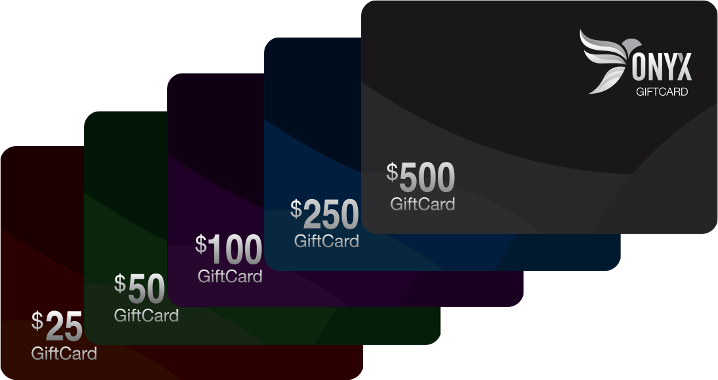
Redeem your gift cards at any of our Merchants

Onyx Gift Cards is a Grenadian company designed to introduce, market and manage gift cards systems in Grenada for retailers and corporations. We are enthusiastic about the effect and influence we will have on the local market. We intend to expand our systems regionally with a range of product offerings and services.
Gift cards are the preferred way of giving and receiving gifts. They carry a monetary value that can be redeemed for gifts at your favorite store.
Onyx GiftCards are “Open Gift Cards” which means that they can be redeemed at multiple merchant locations. They are standard credit card size, can fit into the average wallet and made of PVC plastic. Onyx GiftCards are Barcoded for security and safety for the consumer and bear a disclaimer at the back.
Onyx Giftcards can be bought with a branded Card backer which is black in colour and is designed to fit the card. There is an area to write a brief message to the recipient as well.
CVV fraud indicators are the order, device, and behavior signals that a card-not-present payment is being made with a stolen card number instead of by the card's owner. They include repeated CVV mismatches, contradictory AVS and CVV results, bursts of low-value test orders, recycled email and shipping data, and velocity spikes from one device or IP range. A single signal is weak evidence; the cluster is what fraud teams act on.
The three-digit CVV is printed on the card and is meant to demonstrate physical possession, but it leaks easily. Breached merchant databases, phishing pages, and carding markets often bundle card numbers with CVV, expiry, and cardholder names. Verification only confirms the value matched what the issuer has on file, not who typed it.
That is why CVV checks belong inside a scoring model, not at the front door as a yes-or-no gate.
Card testing leaves a distinctive pattern: dozens or hundreds of low-value attempts, many declined for CVV or do-not-honor, followed by a handful of approvals. Attackers often target digital goods, gift cards, and donations because fulfillment is instant and easily resold. Track decline-to-approval ratios by IP, device fingerprint, and email domain rather than by card number.
Static checks like CVV and AVS can be defeated by anyone holding a full card data dump. Behavior is harder to fake at scale: how a visitor navigates, how long they linger on a product page, whether they read terms, and whether their session history is coherent. Velocity across accounts, cards, and addresses remains the most reliable fraud signal in card-not-present environments.
No. Typos, newly reissued cards, and cardholders who confuse CVV with PIN or ZIP account for a large share of mismatches. Treat one mismatch as a moderate signal and require a second indicator before blocking.
Yes. If the stolen data set includes the CVV, the check passes. Full card records command higher prices on carding markets precisely because they clear this test, which is why CVV verification alone is a weak control.
Velocity: the same device, IP, or email domain cycling through multiple cards or accounts in a short window. It is hard to fake and rare in genuine shopping behavior.