
Card Number Validation Platform Buying Guide
How to buy a card number validation platform for a legitimate payment flow: format and BIN checks, latency targets, PCI scope, and pitfalls to avoid.
Redeem your gift cards at any of our Merchants
You can purchase a gift card from any of these locations
Card Number Validation System: How It Works and How to Build One

Onyx Gift Cards is a Grenadian company designed to introduce, market and manage gift cards systems in Grenada for retailers and corporations. We are enthusiastic about the effect and influence we will have on the local market. We intend to expand our systems regionally with a range of product offerings and services.
Gift cards are the preferred way of giving and receiving gifts. They carry a monetary value that can be redeemed for gifts at your favorite store.
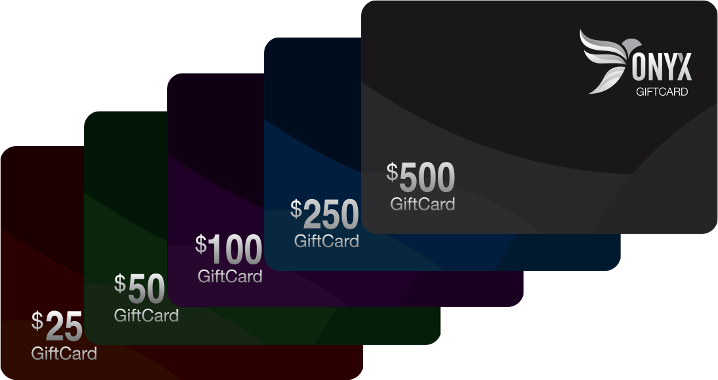
Onyx GiftCards are “Open Gift Cards” which means that they can be redeemed at multiple merchant locations. They are standard credit card size, can fit into the average wallet and made of PVC plastic. Onyx GiftCards are Barcoded for security and safety for the consumer and bear a disclaimer at the back.
Onyx Giftcards can be bought with a branded Card backer which is black in colour and is designed to fit the card. There is an area to write a brief message to the recipient as well.
A card number validation tool confirms that a card number is well formed before a payment request leaves your system: correct length for the network, a valid issuer prefix, and a passing Luhn (mod-10) checksum. For most merchants the best pick is the validation layer inside the payment gateway API you already use, because it runs server-side, keeps raw card data out of your code, and returns card brand and BIN details in the same call. Judge any tool on five criteria: checksum accuracy, BIN/IIN database freshness, card brand and funding-type detection, response latency, and whether the tool ever stores the number it validates.
The mechanical checks are the same across products, even when the packaging differs.
None of these checks prove that an account exists, holds funds, or belongs to the person typing it in. A number can pass Luhn and still be closed, expired, or invented.
Payment processors bundle format validation, BIN lookup, and address verification into the authorization request. You send the number once over TLS and get back a structured result.
Best for: any merchant taking live payments, and any team that wants one integration instead of three.
Small libraries in most languages implement the mod-10 check and prefix tables. They run locally in microseconds and add no dependency on a network call.
Best for: front-end form validation, internal tooling, and QA fixtures. Pair it with gateway validation for anything that moves money.
These services focus on the first six to eight digits and return issuer name, country, card brand, and product type.
Best for: risk teams, subscription billing systems that route by issuer country, and analysts cleaning historical transaction data.
Upload a file, get back a pass or fail per row plus a reason code. Useful when you inherit a spreadsheet of card numbers from a legacy system.
Best for: one-time cleanup work, handled inside a controlled environment whenever possible.
Format validation is a filter, not a guarantee. It will not tell you whether the card is active, whether the CVV is correct, or whether the cardholder is legitimate. Those answers come from the issuer through authorization and from fraud tooling that watches velocity, device, and geography. Keep validation in its lane: it removes obvious typos before they reach the network and saves you the cost of avoidable decline fees. Treat any product that promises more than that with suspicion.