
Card Number Validation Platform Buying Guide
How to buy a card number validation platform for a legitimate payment flow: format and BIN checks, latency targets, PCI scope, and pitfalls to avoid.
Choose from any of our gift cards to give to your loved ones
card number validation methods
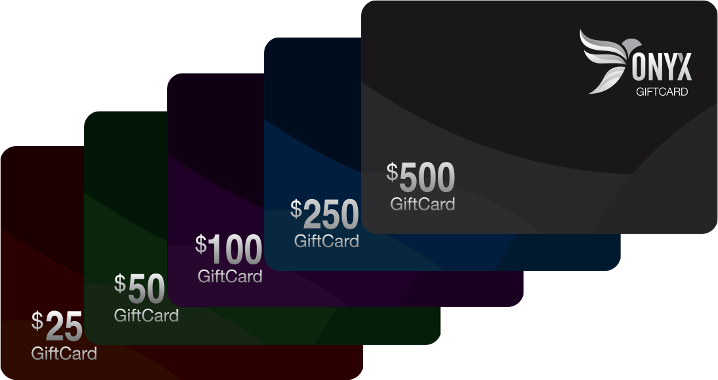
Redeem your gift cards at any of our Merchants
You can purchase a gift card from any of these locations

Onyx Gift Cards is a Grenadian company designed to introduce, market and manage gift cards systems in Grenada for retailers and corporations. We are enthusiastic about the effect and influence we will have on the local market. We intend to expand our systems regionally with a range of product offerings and services.
Gift cards are the preferred way of giving and receiving gifts. They carry a monetary value that can be redeemed for gifts at your favorite store.
Onyx GiftCards are “Open Gift Cards” which means that they can be redeemed at multiple merchant locations. They are standard credit card size, can fit into the average wallet and made of PVC plastic. Onyx GiftCards are Barcoded for security and safety for the consumer and bear a disclaimer at the back.
Onyx Giftcards can be bought with a branded Card backer which is black in colour and is designed to fit the card. There is an area to write a brief message to the recipient as well.
The most useful thing to know before you buy card number validation software is that validation is a data quality check, not a verification or authorization check. A tool that runs a Luhn checksum and matches issuer ranges tells you a number is well formed and plausibly issued. It cannot tell you whether an account is open, funded, or approved for a payment. Buy on API reliability, BIN data freshness and PCI scope impact, and treat any vendor promising to "confirm live cards" as a warning sign rather than a feature.
Validation checks structure: digit count, checksum, and issuer identification number (IIN, often called BIN) range. Verification checks the cardholder, usually through 3-D Secure or an address and CVV check at the moment of payment. Authorization asks the issuer to approve or decline a specific amount. Confusing these three is the most common buying mistake, because it leads teams to buy a structural validator expecting it to reduce declines from stolen or closed accounts.
One more boundary matters. Running card numbers through a validator to find out which of them still work is card testing, a fraud pattern that merchants, acquirers and card networks actively monitor. Legitimate buyers validate numbers they already have a right to process: their own checkout forms, batch imports, or sandbox test data supplied by the networks.
Use bands, not single numbers, when you write requirements. For latency, a hosted lookup should sit comfortably under 150 milliseconds at the 95th percentile; anything near the time budget of your checkout call is too slow for real time use. For uptime, expect a written service level of 99.9 percent or better with status history you can inspect. For range table refresh, daily updates are the practical baseline and weekly is the floor; monthly is too stale for prepaid and fintech issuers. For network coverage, confirm all major networks plus regional debit schemes you actually accept. For false positive tolerance on issuer mapping, ask the vendor to show their method rather than quoting a percentage. For batch throughput, test the documented rate limit, not the marketing figure.
Vendors usually price one of three ways: metered per lookup, committed monthly volume with overage, or a flat platform license. Metered pricing looks cheapest at low volume and gets expensive at checkout scale. Committed tiers reward forecasting but punish seasonal spikes unless overage is capped. Flat licenses win when you validate inside your own infrastructure and call the service millions of times. In every model, ask what counts as a billable call, whether sandbox traffic is charged, whether batch and real time calls price the same, and how much notice you get before a rate change. Ask for the renewal terms in writing before the trial ends.
No. Validation confirms structure and issuer range. Approval comes from the issuer through an authorization request.
It can check that the value has the right number of digits at entry. It cannot confirm the code is correct without an authorization request, and the code must not be stored after the transaction.
Yes, for the cases the processor never sees: imported spreadsheets, CRM records, internal tooling, and migration scripts. Catching a malformed number before it reaches the gateway saves a failed call and a support ticket.
Daily if your volume is meaningful, and never less than weekly. Card portfolios are reissued and renumbered continuously.