
Roblox Giftcards: Where to Buy, How to Redeem, and What to Know
Learn how to buy, redeem, and safely use Roblox giftcards. We explain the best retailers, steps, and what to do if a code fails.
Choose from any of our gift cards to give to your loved ones
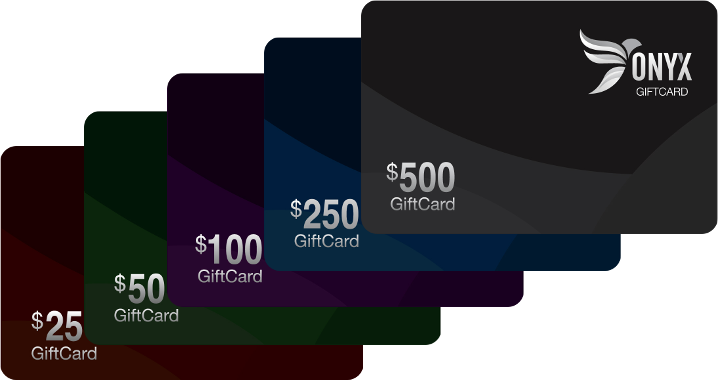
Redeem your gift cards at any of our Merchants

Onyx Gift Cards is a Grenadian company designed to introduce, market and manage gift cards systems in Grenada for retailers and corporations. We are enthusiastic about the effect and influence we will have on the local market. We intend to expand our systems regionally with a range of product offerings and services.
Gift cards are the preferred way of giving and receiving gifts. They carry a monetary value that can be redeemed for gifts at your favorite store.
Onyx GiftCards are “Open Gift Cards” which means that they can be redeemed at multiple merchant locations. They are standard credit card size, can fit into the average wallet and made of PVC plastic. Onyx GiftCards are Barcoded for security and safety for the consumer and bear a disclaimer at the back.
Onyx Giftcards can be bought with a branded Card backer which is black in colour and is designed to fit the card. There is an area to write a brief message to the recipient as well.
A vanilla giftcard is a prepaid Visa, Mastercard, or American Express card that works anywhere those brands are accepted. You load it with a fixed amount, pay a purchase fee, and spend it until the balance hits zero. Vanilla giftcards are sold at many big-name retailers and online, and you can track the remaining balance on the issuer's website or by phone.
Vanilla is a brand of prepaid gift cards issued by InComm Payments, a company that runs payment products for retailers. The cards are not linked to a bank account and require no credit check to buy.
You choose the amount you want to load, usually between $10 and $500, and that amount becomes your spending limit. The card carries a network logo such as Visa, Mastercard, or American Express, so merchants treat it like a normal debit or credit card.
Unlike a store-specific gift card, a Vanilla card can be used at nearly any business that accepts its payment network. Restaurants, online shops, gas stations, and doctors' offices all qualify as long as the network is accepted.
Vanilla gift cards are physical plastic cards stocked in stores across the United States. Common places include Walmart, CVS, Walgreens, Dollar General, Kroger, and many gas station convenience stores.
You can also buy them through the official Vanilla website, which offers both physical cards sent by mail and e-gift cards delivered by email. Online orders may require identity checks, especially for larger amounts, to prevent fraud.
Shopping around matters because store prices for the same card can vary. A $50 Vanilla Visa card might cost $53.95 at one store and $55.95 at another, so always check the packaging for the total fee before going to the register.
In-store cards are activated automatically at checkout. The cashier scans a barcode, you pay for the card plus the fee, and the card becomes ready to use immediately.
Online purchases require a few extra steps. You provide the recipient's email, pay with a credit card or bank transfer, and the e-code arrives within minutes or a few hours depending on the product.
Registering your card on the Vanilla website is optional but recommended. You create an account, enter the card number and security code, and then you can see your transaction history and report problems faster.
The simplest way is to visit vanillagift.com and enter your card number and expiration date. The balance updates in real time, but you may need to verify a captcha or answer a security prompt.
You can also call the toll-free number printed on the back of the card. The automated system reads your balance aloud and sometimes offers a 24-hour voice confirmation.
If you are in a store, ask a cashier to run a balance inquiry. Most checkout systems can check the card's remaining value without charging you.
The biggest cost is the purchase fee you pay at the register. For a $25 card, fees usually run $2.95 to $4.95; for a $100 card, fees can be $4.95 to $6.95.
Some Visa and Mastercard versions charge a monthly service fee after 12 months of inactivity. That fee is typically $2.50 to $3.95 a month, and it is deducted from the remaining balance until the card runs out.
State laws affect these fees. In some states, inactivity fees are banned entirely, and in others they can start only after 24 months. Read the card carrier or the fine print on the packaging before buying.
Using the card at a store or online does not add a percentage-based transaction fee. The merchant pays the network processing fee, not you, so a $40 purchase subtracts exactly $40 from your balance.
One exception is foreign transactions. If you use a Vanilla card abroad, the network may convert the currency and charge a foreign exchange fee that reduces your available balance.
The money loaded on a Vanilla gift card does not expire under federal rules. The Consumer Financial Protection Bureau has stated that gift card funds must remain valid for at least five years from the activation date.
What can expire is the plastic itself after your state's dormancy period. If the card sits unused for a long time, the issuer may start charging inactivity fees, which can drain the balance even if the card has not reached its printed expiration date.
In practice, you should spend the card within a few months of purchase. That sidesteps inactivity fees and eliminates the risk of forgetting the card in a drawer.
In a physical store, hand the card to the cashier like a credit card. You can choose to run it as credit if you have not set up a PIN, or as debit if you created one during registration.
For online checkout, enter the 16-digit card number, the expiration date, and the three-digit CVV code printed on the back. Treat it like any Visa or Mastercard in the payment form.
Some online stores block prepaid cards because of fraud concerns. If that happens, you can pay with a different method or use a service like PayPal, if allowed, to link the card as a funding source.
Most physical stores can split a transaction across two payments. You can run the Vanilla card for its remaining balance and then pay the rest with cash, a debit card, or another gift card.
Online, the process is trickier. Many websites do not accept split payments, so if your order costs $80 and your card has $75, the transaction will fail.
When shopping online, preload your shopping cart, check your card balance, and adjust your order to stay below that number. If you are short, buy a second prepaid card or wait for a later purchase.
Standard Vanilla gift cards may not offer the same fraud protection as a bank-issued credit card. If someone steals the card and uses it before you report the loss, the funds may be gone for good.
You can increase your protection by registering the card online immediately after purchase. Registration lets the issuer see the card's history, which can help if you need to file a dispute.
Call the customer service number on the packaging or on the company website as soon as you notice a problem. Have your receipt and the card number ready; in some cases, the issuer can replace the card and transfer the remaining balance.
No, standard Vanilla gift cards are non-reloadable. Once the balance is spent or the card expires, you cannot add more money to it.
If you want a reloadable prepaid card, look at Vanilla's direct deposit product or pick a general-purpose reloadable card from another company. Those cards come with identity verification and ongoing fees, but they allow you to load funds multiple times.
For simple gifting, the non-reloadable card is usually the better choice. No account to maintain, no monthly maintenance fees except the inactivity charge, and no risk of overspending beyond the loaded amount.
Returns depend entirely on where you bought the card. Big-box retailers like Walmart and Target often accept returns of unused, unactivated gift cards within their standard return window, and they may refund the full value plus the purchase fee.
Online sellers have stricter policies. In most cases, an e-gift card cannot be returned once the code is delivered, because the recipient could have copied the numbers.
If you accidentally buy the wrong amount or choose a card with a fee you did not expect, ask the store manager in person. A polite conversation often solves the problem faster than a customer service call center.
Yes, for most people. The recipient can pick exactly what they want, and the card works at thousands of stores, making it more flexible than a single-brand gift certificate.
Compared to sending cash, a Vanilla card is easier to spend online and less tempting to lose. It arrives in a neat package, activates in seconds, and does not require a bank account.
The main downside is the purchase fee and the inconvenience of tracking a small remaining balance. If the fee feels wasteful, consider cash or a store-specific card from a place the person already shops.
E-gift cards are usually delivered to your email within a few minutes to a few hours. The delivery time depends on the payment method and the amount you load.
That depends on the store. Many online retailers allow only one prepaid card per order, so you may have to use a second payment method for the rest.
Online merchants sometimes place a temporary hold of $1 to $10 to verify the card. This hold can push the available balance below your purchase amount and cause a decline.
No. Vanilla gift cards are not designed for cash withdrawals at ATMs, and cash back at checkout is not allowed on prepaid gift cards.
Check the packaging for the purchase fee and any maintenance fees before you choose a card. Different amounts carry different fee structures, so compare options at the store rack.
Buy with a payment method that gives you a receipt, like a credit card or cash, and keep that receipt until the gift is given. If you are buying for someone else, make sure the card has a PIN option if you want to use it at gas pumps.
Use the card quickly after purchase. That minimizes the chance of losing the card and keeps you clear of inactivity fees.