
Defend Against Card Testing: 10 Merchant Steps

Our Cards

Choose from any of our gift cards to give to your loved ones

Card Testing Defense Techniques: How Merchants Stop Card Testing
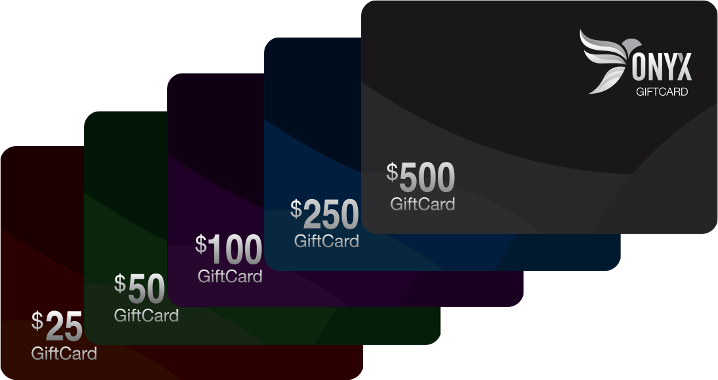
giftcardimage

Where to Use?

Redeem your gift cards at any of our Merchants

more on this topic

Where to Buy?

You can purchase a gift card from any of these locations

Card Testing Defense Best Practices Guide

ABOUT US

about

What is ONYX GiftCards?

Onyx Gift Cards is a Grenadian company designed to introduce, market and manage gift cards systems in Grenada for retailers and corporations. We are enthusiastic about the effect and influence we will have on the local market. We intend to expand our systems regionally with a range of product offerings and services.

What is a Gift Card?

Gift cards are the preferred way of giving and receiving gifts. They carry a monetary value that can be redeemed for gifts at your favorite store.
Onyx GiftCards are “Open Gift Cards” which means that they can be redeemed at multiple merchant locations. They are standard credit card size, can fit into the average wallet and made of PVC plastic. Onyx GiftCards are Barcoded for security and safety for the consumer and bear a disclaimer at the back.
Onyx Giftcards can be bought with a branded Card backer which is black in colour and is designed to fit the card. There is an area to write a brief message to the recipient as well.

How it Works?

  • Buy an Onyx Gift Card at these local stores
  • Give your gift card to friends, family, co-workers, etc.
  • The recipient can shop at our select merchants nationwide
  • Your friends, family, co-workers, etc. will present their gift card at checkout to pay for your item(s)
  • They will walk away happy with the best gift ever...the gift of Choice

Why ONYX GiftCards?

  • Save TIME. No need to run around looking for the perfect gift
  • Redeem from a variety of business island-wide. We will continue adding businesses as fast as ONYX grows.
  • ONYX Gift Cards do not expire
  • Cards are valued at convinient amounts to meet every need and occasion

Card testing is an attack where someone runs a list of stolen card numbers through your checkout to find out which ones still work. Each attempt looks like a normal small order, so the volume, not the size, is the tell. Defend by making every attempt cost the attacker something: rate limit by IP and card fingerprint, put a challenge in front of checkout, enforce CVV and AVS on every card-not-present transaction, and alert on sudden jumps in declines or authorization attempts.

Why testers pick small merchants

Large retailers have fraud scoring and dedicated risk teams. Small stores often approve anything that clears the processor, which makes them a cheap place to validate a stolen list. The damage shows up later as chargebacks, processor fines, and a lower approval rate on real customers.

Prerequisites

Defense steps

  1. Turn on per-IP rate limits for checkout and card update pages, with a hard cap per minute and per hour.
  2. Add a CAPTCHA or invisible challenge to checkout, account creation, and saved card update forms.
  3. Require CVV and full AVS matching on every card-not-present order, and auto-void mismatches instead of reviewing them.
  4. Set a minimum order value that covers your fees, and remove any free or one-dollar trial path that testers can abuse.
  5. Build velocity rules on card fingerprint, email, device ID, and shipping address, not just IP.
  6. Turn on 3-D Secure or step-up authentication for orders that trip a velocity rule.
  7. Block disposable email domains and traffic from known proxy and hosting networks at the edge.
  8. Restrict or challenge high-risk countries and data-center ASNs where your real customer base does not need them.
  9. Alert on authorization rate and decline rate changes over a rolling hour, and route alerts to a phone, not an inbox.
  10. Log every attempt with headers and card fingerprint, then share confirmed testing patterns with your processor.

Signals that you are under test

After an attack

  1. Void or refund the fraudulent charges before capture where your gateway allows it.
  2. Block the offending BINs, IP ranges, and email domains in your rules engine.
  3. File an incident report with your acquirer and ask about chargeback thresholds.
  4. Review the rules that failed and tighten the threshold that let traffic through.

Card testing rarely stops after one pass. Keep the rate limits and challenges on permanently, review blocked traffic monthly, and treat a sudden approval rate drop as an incident until you prove otherwise.

Contact Us

Latest

Read our complete guide: Should You Buy CVV From a Card Shop? The Honest Buyer's Guide