
How to Stop Card Testing Attacks on Payment Forms
A guide to stopping card testing attacks: velocity limits, bot challenges, card verification, and decline monitoring, with pros, cons, and rollout order.
Choose from any of our gift cards to give to your loved ones
card testing defense strategies
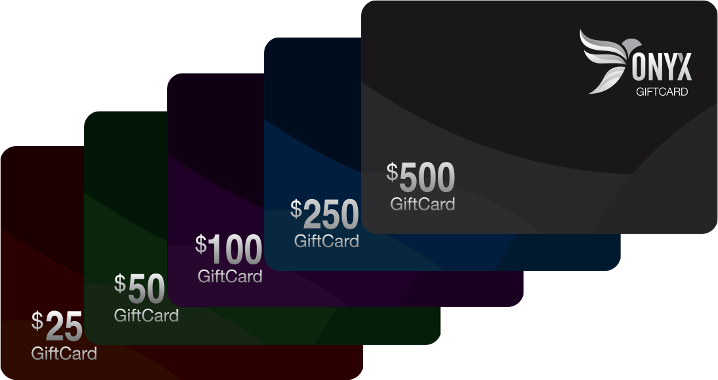
Redeem your gift cards at any of our Merchants
Card Testing Protection: How Merchants Block Stolen-Card Attacks
You can purchase a gift card from any of these locations

Onyx Gift Cards is a Grenadian company designed to introduce, market and manage gift cards systems in Grenada for retailers and corporations. We are enthusiastic about the effect and influence we will have on the local market. We intend to expand our systems regionally with a range of product offerings and services.
Gift cards are the preferred way of giving and receiving gifts. They carry a monetary value that can be redeemed for gifts at your favorite store.
Onyx GiftCards are “Open Gift Cards” which means that they can be redeemed at multiple merchant locations. They are standard credit card size, can fit into the average wallet and made of PVC plastic. Onyx GiftCards are Barcoded for security and safety for the consumer and bear a disclaimer at the back.
Onyx Giftcards can be bought with a branded Card backer which is black in colour and is designed to fit the card. There is an area to write a brief message to the recipient as well.
Card testing is an attack on a payment endpoint. A script submits many card numbers, often thousands per hour, and reads each authorization response to learn which numbers are live. Defense needs four layers: rate limits, payment checks, bot detection, and a response plan that runs in minutes.
No single control stops it. Rate limits cut volume. Payment checks raise the cost per guess. Bot signals catch the script before it reaches the processor. Monitoring catches what the first three miss.
Set limits per IP, per card fingerprint, per email, and per device. A practical starting point: 5 authorization attempts per card per hour, 20 per IP per hour, and 3 failed attempts per customer session. Block the identifier for 24 hours after it trips. Apply limits at the edge, not only in application code, so the request never reaches the processor.
Require CVV and AVS on every authorization. Reject a mismatch instead of accepting the charge. Enable 3-D Secure on high-risk traffic. Use the issuer response codes: a high share of do not honor and invalid card number replies from one source points to enumeration. Set a floor ticket size and flag orders below $1.
Add a challenge on the payment form when risk scores rise. CAPTCHA, proof-of-work, or a JavaScript check raises the cost per attempt. Collect device fingerprint, TLS fingerprint, and header order. Scripts reuse the same fingerprint across hundreds of cards. Reject requests with no browser history on a session that submits a card.
Keep a list of IPs, ASNs, and proxies tied to prior attacks. Block disposable email domains. For high-risk BINs, require 3-D Secure or decline. Refresh the list weekly. Attackers rotate hosts, so pair static lists with velocity rules.
Small merchants can run the first two layers with processor rules alone. Merchants above roughly 10,000 orders per month need the bot layer and a named owner for the alert queue.